


Hello and welcome to the 35th edition of The Southport Lead.
Today’s newsletter focuses on the second phase of a review of the policing of the disorder which followed the murders of Bebe, Elsie and Alice last year. The days that followed that dreadful attack saw riots first in Southport, then further afield.
The scale of the violence and the numbers of people involved remain shocking almost a year on and one point of interest in His Majesty's Inspectorate of Constabulary and Fire & Rescue Services’s review of the policing is the analysis of what factors led people to take to the streets and take part in violent crime. Read on for more on that.
Also in today’s newsletter is the story of one man’s descent into homelessness and the charity that helped turn his life around.
Police review finds ‘no single issue’ led to Southport riots
By Jamie Lopez
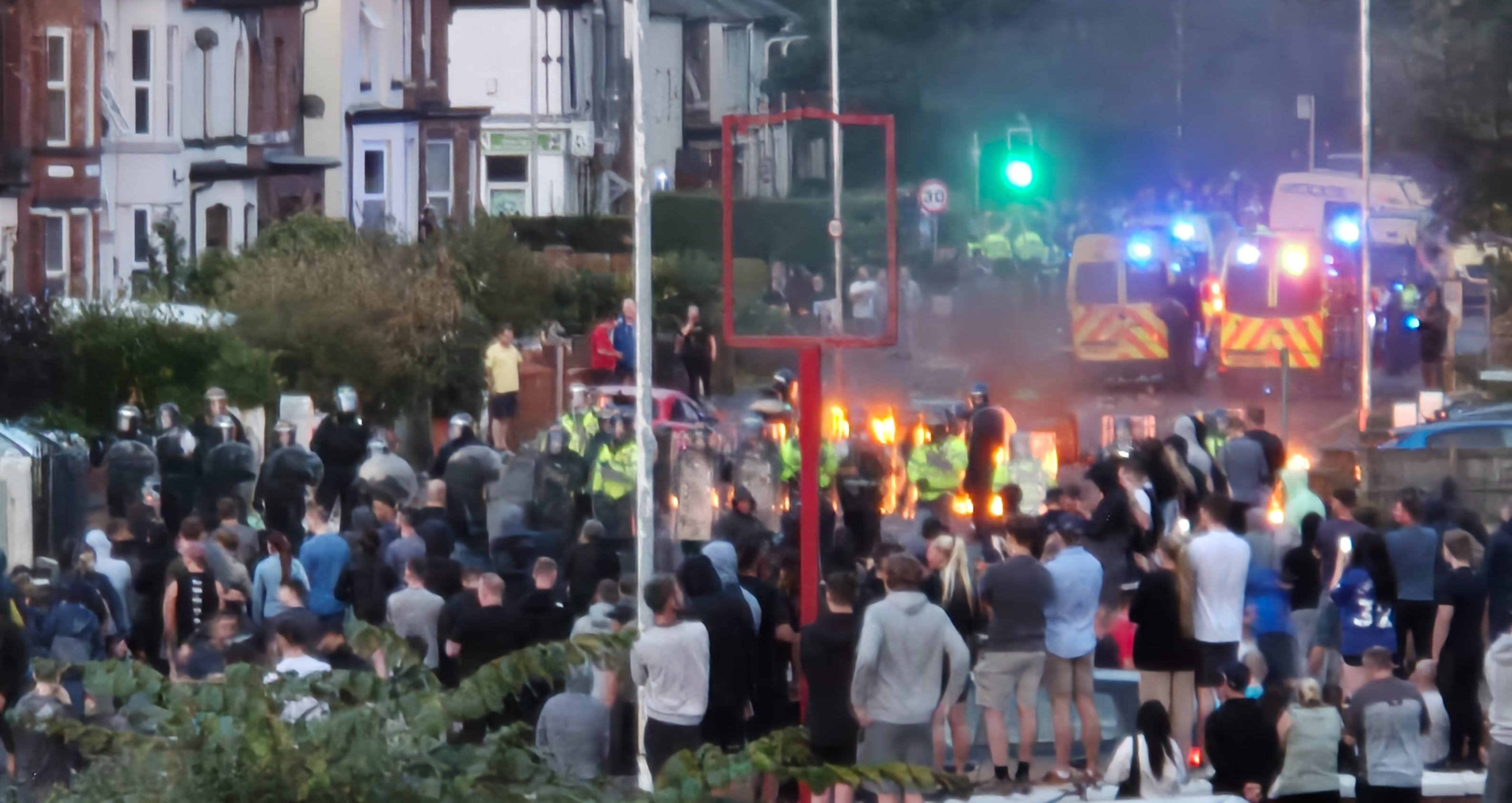
A report into the riots which followed the Southport murders last summer has concluded “no single issue” caused the disorder to spread.
In the days after Bebe King, Elsie Dot Stancombe and Alice Da Silva Aguiar were murdered, riots followed first outside Southport’s mosque and then further afield in the areas including Blackpool, Liverpool and Rotherham.
These included violence, criminal damage, looting, arson and saw police officers attacked and a hotel housing asylum seekers set on fire. So far, some 1,840 arrests have been made, with 1,103 people charged and hundreds jailed.
Since last year, His Majesty's Inspectorate of Constabulary and Fire & Rescue Services' (HMICFRS) has been investigating the policing response to the disorder in a bid to identify lessons for the future and it has now published the second part of its findings.
Among these, HMICFRS looked into the causes and found a range of contributory factors before concluding that there was not one which was entirely responsible, adding that “most people who took part in the disorder lived locally” and pointing to an age range of those arrested of 11-81.
The report states: “Taking all our evidence into account, we conclude that the causes of the widespread disorder were extremely complex. It isn’t possible to attribute the cause to one single factor.
“Some people, including politicians, and many media outlets have suggested that the disorder was the result of well-organised and co-ordinated action by extremist groups. Others stated that the disorder was caused by deliberate, targeted disinformation from a variety of sources.
“However, we found that the causal factors were more complex than were initially evident. Some of the main reasons for the widespread disorder were social deprivation, austerity and the economic downturn, political policies and decisions on migration and asylum, and decreasing trust and confidence in policing.
“What is clear, in common with the recent policing history of disorder, is that an unprecedented event triggered the initial disorder. In this case, the murders of three young girls in Southport, compounded by some of the harmful online reporting that followed.”
While some have responded to this as vindication that far right ideology was not in any way responsible for a mosque being attacked (the Spectator was almost gleeful in its coverage of the report), it is not accurate to say this was not an element.

As previously reported in The Lead’s national coverage, taxi driver Andrew McIntyre was among those who encouraged people to attend and take part in the disorder, using private messaging service Telegram to rally using phrases such as “THE MOSQUES MUST BURN”
This element is listed as being among those factors, but it is argued that the other contributory factors must be both considered and learned from to better prepare for future problems.
It added: “No single issue or factor caused the disorder to spread. The causes are varied and complex. But the police service and politicians cannot ignore them if they are to try to prevent widespread disorder in the future.”
Social media
The issue of social media was again raised in relation to both monitoring of it and the availability of harmful content there. The HMICFRS also highlighted the role of Merseyside Police in not releasing more information about Axel Rudakubana when false rumours were maliciously spread online.
As in the case of Lancashire Constabulary’s handling of Nicola Bulley’s missing person investigation, it has been found that a failure to rebut false information about his identity and background contributed to public anger.
“The volume of this online content”, the report said, “and the overwhelming speed at which it was shared, further influenced widespread disorder. It served as a call to arms for large groups of disillusioned people.”
It added: “The police service must communicate the facts. Repeatedly, continuously and effectively as circumstances change and develop. If not, others will take over the narrative with overwhelming amounts of online content. And some of this may be false or harmful to the police response and the communities the police are there to protect.”
The head of communications at a police force which contributed to the report said forces need to be “relentless in their briefings to correct inaccurate or misleading content”. This would, it is argued, help in the battle against those who either wittingly or unwittingly spread incorrect information.
The report noted: “Online posts about the disorder, including misinformation and disinformation, came from a range of sources. The information we reviewed suggested that disaffected individuals, influencers or groups, rather than criminal factions or extremists, were those predominantly responsible for inciting people to act violently and take part in disorder.”
A spokesperson said: “Policing cannot function effectively when digital platforms allow harmful content to spread without consequence. The lack of accountability in the report undermines the broader need for a multi-agency response to misinformation and disorder.
“Public education also has a critical role to play. Equipping communities with the tools to assess online content critically must be a shared effort across government, tech companies, and civil society. Tackling misinformation requires a coordinated, multi-sector approach.”
Chief Constable Gavin Stephens, chair of the NPCC, said: “Following the events of last summer, it was right that policing was questioned and scrutinised, and we recognise the Inspectorate’s role in that process.
“However, a more balanced assessment is needed, particularly regarding policing’s role in tackling misinformation and disinformation. While there are lessons to learn, it is crucial to acknowledge that law enforcement does not - and should not - regulate online content. Responsibility for ensuring information is accurate and does not fuel harm lies with those posting it, platform providers and regulatory bodies.
“The report states that policing has “no proper answer” for tackling misinformation and disinformation, but the issue extends far beyond law enforcement.
“No public sector organisation or body responsible for public safety is fully equipped to address the scale and complexity of the problem. Policing alone cannot be expected to lead or resolve this volatile challenge; it requires a coordinated, cross government approach. This reality must be acknowledged.
“The report did not fully recognise the successes of the media strategy, particularly in delivering behaviour change and deterrence messaging, which are essential in countering rapidly spreading false narratives that can incite disorder.
“I pay tribute to colleagues in local policing and communications, who worked tirelessly with media colleagues to ensure accurate information, and the consequences of involvement in violent disorder, were widely known and understood.
“A proactive communication model is needed, one that enables policing to engage directly with communities, providing accurate and timely information without overreliance on traditional media. However, achieving this requires resources that policing simply does not currently have, as financial pressures continue to mount.”
In Merseyside, Chief Constable Serena Kennedy welcomed the recommendations issued by the HMICFRS and said the learning points would influence future operations.
She said: “In the hours following the incident in Southport, it became clear that misinformation about the person responsible was circulating on social media.
“As a result, we offered important clarity on where the suspect was born and asked that social media users did not share potentially harmful disinformation. When we were able, we issued further details about the suspect.
“The HMICFRS report asks that legislation and regulation improves to support police forces in their efforts to deal with the consequences of harmful information online, and I wholeheartedly support this.
“While some did take to social media to sow division and took part in disorder on our streets, it was heartening in the aftermath of that disorder to see the reaction of the whole community to heal and mend the destruction left behind.
“The public were joined by Local Policing officers, who pulled together to clean the streets, rebuild walls and re-glaze broken windows.
“We are an organisation committed to constant improvement and will review the report’s recommendations to thoroughly explore any opportunities to ensure we are prepared for incidents in future so that everything possible is done to keep our officers and the public safe and protected.
“Before the publication of this report, we recognised the potential for our Force to learn from incidents of this nature and scale. We began conducting extensive formal debriefs to identify what worked well and any areas we could improve, and they are ongoing. Along with the HMICFRS recommendations, we will ensure all those learning points inform our response to future incidents.”
Recommended reading
Southport FC have a new manager who can hopefully lead the club towards its first positive season in more than a decade. Ste Killen, a must-follow for anyone interested in the region’s Non-League scene, has the latest on the appointment and the ongoing takeover situation.
This article, from Dan Hayes, was published before the managerial announcement but is also well worth reading to get an understanding of exactly what is going on behind the scenes. The current situation is far from clear and this a very good explainer of what is known so far.
Married, well paid and a home-owner… before I knew it, I was on the streets.
By Elliot Jessett
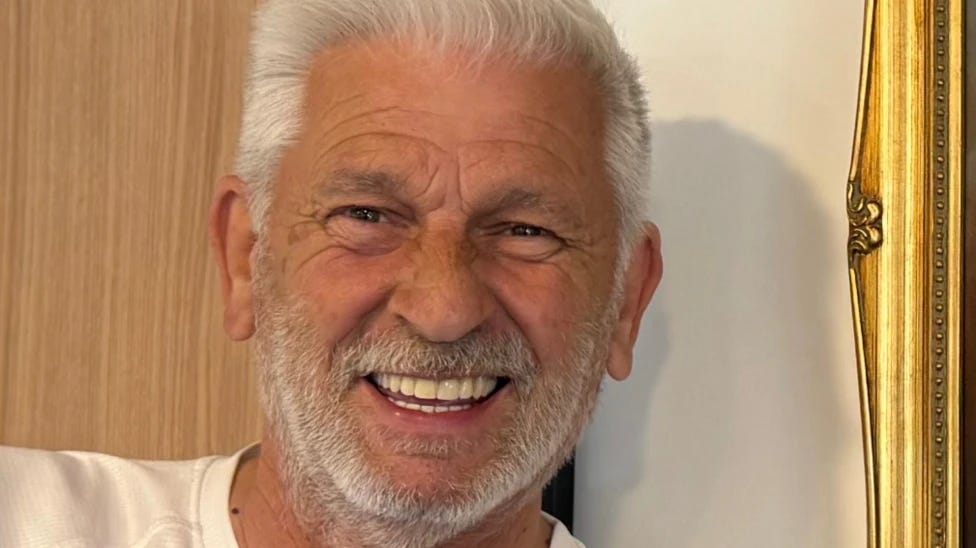
‘If I can end up homeless, then it can happen to anyone’.
These are the sobering words of Stewart Woods who was sleeping rough in Southport before being helped by Merseyside housing charity Emmaus.
Emmaus provides home, training and work opportunities to people who have experienced homelessness. They also offer tailored support and the opportunity to gain skills through its social enterprises – it’s an approach which is having significant results.
