


Hello and welcome to the midweek edition of The Southport Lead.
Yesterday marked Holocaust Memorial Day - an annual commemoration day held to remember the six million Jewish people killed during World War II, the millions of others killed by Nazis, and victims of other genocides.
Throughout World War II, Southport served as an evacuation town with families opening their homes to thousands of children who had moved from larger towns and cities. Today’s newsletter looks back at Harris House - a family home which was repurposed into a Jewish refugee hostel for girls who had fled from Austria and Germany.
The Southport Lead marks its one-year anniversary in January so to celebrate we’re offering 30% off monthly and annual subscriptions for the entire month. That means you can get an annual subscription for just £34.30 or pay £3.49 a month, a little more than the cost of two hours’ parking in Southport town centre. Use this link to take advantage of the offer.
Southport briefing
🛑 More roads across the Norwood area are to be given a 20mph limit. Sefton Council will next week approve plans to reduce the limit on streets or sections of streets which have previously been missed off when adjoining ones have been changed. These include Tithebarn Road, Hart Street, Butts Lane, Crowland Street, Bispham Road and Peel Street. The changes are also designed to discourage drivers from using quieter side-roads as cut-throughs which avoid main routes such as Roe Lane and Norwood Road.
🏎️ Sir Henry Segrave’s Sunbeam Tiger will return to Southport this year, marking the centenary of when he achieved breaking the world land speed record with a speed of 152.33 MPH at this historic location. The return will form the centrepiece of a weekend of celebrations organised by Aintree Circuit Club and supported by Cataclean and Corkills VW. These celebrations will conclude with Tiger taking to Ansdale Beach on Monday 16th March with long term owner Vijay Mallya at the wheel to drive the exact course used by Segrave, exactly 100 years on from the record run.
🚧 Memorial benches around Town Hall Gardens are to be removed and rehomed across the town centre ahead of its redevelopment. The gardens are to be transformed in a £10m redevelopment in memory of Alice, Elsie and Bebe and before that space is being cleared for Lightport, which is the first of Elegantly Eccentric cultural events programme taking place throughout 2026. Planters currently in the garden will be moved for use by community groups across Sefton and benches will be permanently relocated. A spokesperson for Sefton Council said: “Many of the benches feature plaques, with the majority relating to corporate donations or historic commemorations dating as far back as 1959. A small number of plaques contain tributes to people who have sadly passed away and we will handle their relocation with the utmost care and respect. Anybody whose family members are named on a memorial bench are invited to get in touch to share their preferences for relocation. However we appreciate given the age of these plaques family may not come forward. In this instance Sefton Council will ensure these benches are, where possible, relocated as close to the gardens as possible. Other benches will be relocated within Southport, including alternative locations across the town centre or placed in the care of local community organisations.” People wishing to make contact regarding a family member’s bench are asked to email communications@sefton.gov.uk by Monday February 9th so their views can be considered.
Harris House: When Southport welcomed Jewish refugees during World War II
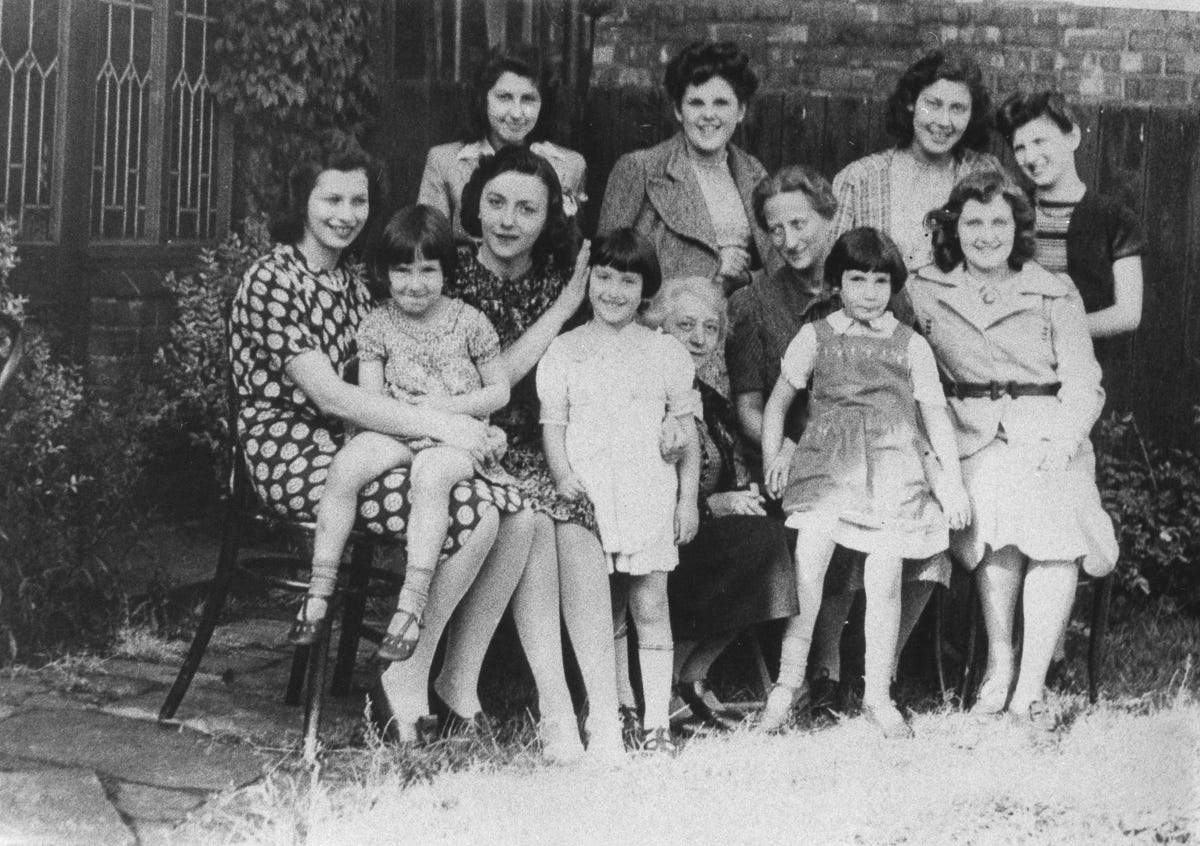
By Jamie Lopez
As Jewish people were brutally targeted in 1930s Europe, the Kindertransport rescue operation saw children evacuated away from Nazi-controlled territories in the months leading to World War II.
Some 10,000 children were taken in across the UK as homes were opened to allow them a chance at safety. February 1939 saw the opening of Harris House - a family home at 29 Argyle Road, Southport, which was handed over for use as a hostel for Jewish girls who had been brought to the country thanks to Kindertransport.
Years later, a long lost diary kept by the girls of Harris House was uncovered and shed light on their experiences in Southport. Ranging from recollections of cinema visits and a day trip to Ainsdale beach for a first experience of the sea to reflections on war and yearnings for peace, the diaries unlocked an otherwise lost and hugely significant part of Southport’s wartime history.
Southport’s Jewish roots
A Jewish community had been active in Southport since the late 19th century, with the first synagogue being consecrated in 1893. That building, on the corner of Sussex Road and Windsor Road, had been built as a chapel for the Plymouth Brethren and still stands to this day, having also seen use as a social club and now as a thermometer factory.
The Jewish population grew through the early 20th century, with a new and much bigger place of worship opening on Arnside Road in the 1920s and remaining in use today.


When the Kindertransport rescue operation occurred, local minister Rabbi Silverstone spoke of the need to support Jews fleeing Germany and this call was heeded by Ruth Livingstone who set up the Southport Branch of the British Inter-Aid Committee of the Movement for the Care of Children from Germany and set about finding a home and funding.
Harris House
In December 1938, the Manchester Jewish Refugees Committee was informed by Mrs Livingstone and her husband Harry that they had sought permission for a home on Argyle Road to be used as a hostel for evacuated girls for four years. The home’s owner, Miss Jose Harris, would have it named after her in her honour.
Funding for the venture and its costs such as staffing and food supplies came through both one-off and regular donations. In January 1939, a fundraising concert was held at the Garrick Theatre and saw stars such as George Formby take to the stage as some £600 was raised.
