


Hello and welcome to today’s edition of The Southport Lead.
On Friday, MPs voted on the latest effort to legalise assisted dying and the result means it is not likely to happen any time in the next few years. It is one of very few matters in which MPs are not instructed to vote along party lines but instead to consider it a matter of conscience.
Over the past couple of years, two debates have raged simultaneously, one on the principle of assisted dying and another on the particular process by which it was being attempted. Without going too much into the detail of what is a technical Parliamentary process, many felt it was being rushed through in a manner which lacked proper oversight and scrutiny.
Among those who voted against it was Southport MP Patrick Hurley, someone whose own experiences of losing his wife and father to cancer informed his views. Writing in today’s edition, he says this does not gives him greater authority on the subject and acknowledges that others have had similar experiences and come to the opposite conclusion.
Crucially, he says this vote should not be seen as a moment of triumph and instead reflects on the need for unity - both in people’s most desperate moments and in the search of a viable future for properly addressing the problems facing adult social care and palliative care. Read on to hear from Hurley in his own words.
Southport briefing
🚜 The first ever Southport Agriculutral Show will take place at Victoria Park next year. Described as elebration of farming, food, livestock and rural life, the event will take place on April 17-18 and showcase agriculture, animals, local producers and independent businesses. It is scheduled to offer livestock and animal displays including a ‘Llamapalooza’ contest among other entertainment and activities. Announcing the event, the organisers said: “Whether you’re passionate about farming, interested in where your food comes from, looking to support local businesses, or simply searching for a great family day out, the Southport Agricultural Show promises something for everyone.”
☕ A highly regarded Liverpool coffee shop is set to open in Southport as part of the regeneration and modernisation of a town centre building. Crosby Coffee Roasters is set to move into the ground floor of Eastbank - formerly known as the Eastbank Enterprise Arcade - and will be available to both the public and the businesses based above it. The redevelopment of the historic building is one of the major schemes of Southport Town Deal and is designed to offer a hub for digital and creative businesses as the town looks to adapt to the shift from retail careers to meet more modern, professional needs. A state-of-the-art podcast studio recently opened inside the building which is also home to a marketing agency and hosts frequent networking events.
🔔 The annual Heritage Open Days Festival is now under way with Southport’s biggest ever number of events. More than 40 venues are hosting talks, tours, exhibitions and displays as the free festival returns with this year’s theme of ‘Everyday Histories’. celebrating not just the buildings but also the people who worked or lived in them. Among the locations available to visit are churches, Marshside Fogbell, a little-known ballroom inside Southport & District Temperance institute while talks include those on the the history of Southport’s railways, Silcock’s Stories of Southport. The popular Lost Street display which offers Victorian-era Nevill Street also returns. Full listings are here.
🦜 Sefton councillors will be asked to support pausing the closure of the Botanic Gardens Aviary to conduct further assessments over its future. At a full council meeting on Thursday, a motion will be put forward by Meols ward councillor Dan Lewis which raises the strength of opposition to the proposed closure and seeks more details and evidence to explain the decision. The Liberal Democrat councillor warns “significant concern” has been expressed by residents, volunteers and community organisations about both the proposed closure and how the decision was communicated. As reported in the previous edition of The Southport Lead, the council’s overview and scrutiny committee will also be asked to review the decision on Tuesday.
🙏 Sefton, St Helens & Knowsley Coroners office is appealing for help in finding the next of kin of a woman who died in Southport. Louise Holland, 55, died at her home address on Lord Street on Monday 7 September and police say there are no suspicious circumstances surrounding her death. Anyone who can help the Coroner identify or trace any potential next of kin is asked call Emma at the coroner’s office on 0151 934 4584 or email Coronerreferrals@sefton.gov.uk
‘Why I helped vote down the Assisted Dying Bill’ - Southport’s MP
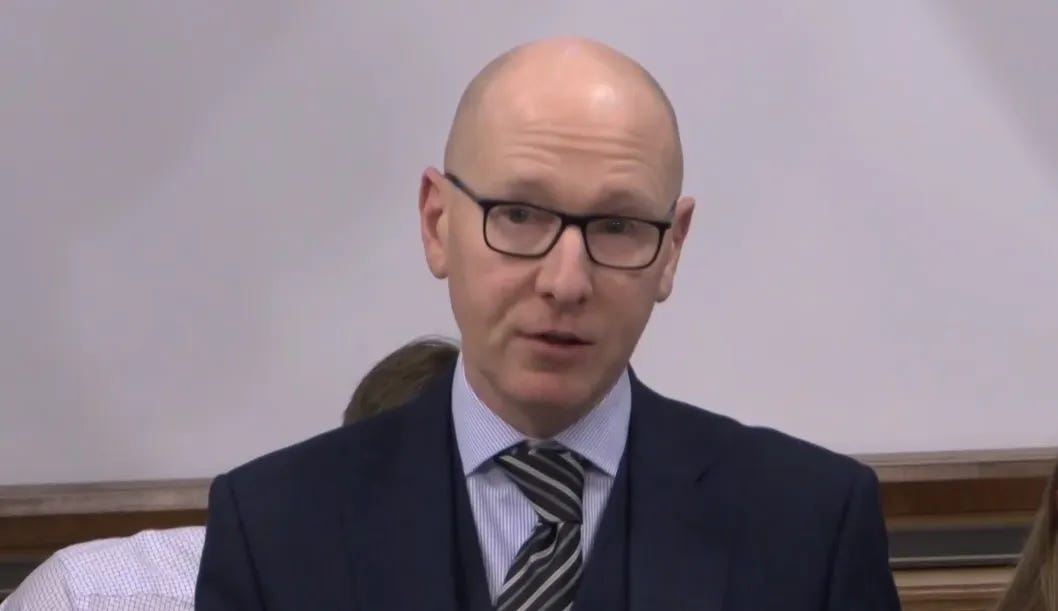
By Patrick Hurley, MP for Southport
On Friday, I voted against the Assisted Dying Bill.
After a long debate, a great deal of thought on all sides, and a protracted Parliamentary process played out over two years, the House of Commons decided not to change the law. I know there will be people who are relieved at that result, just as there will be people who are deeply disappointed by it.
I don’t think this is an issue on which anybody should be particularly triumphalist.
I’ve listened over the last few months to colleagues on both sides of the argument talk about some incredibly difficult and personal experiences. I understand the arguments made by supporters of the Bill. I understand why somebody facing a terminal illness might want the certainty that the Bill sought to provide. And I know that colleagues who voted for it did so, overwhelmingly, because they thought it was the compassionate thing to do.
But I came to a different conclusion.
Earlier this week I wrote on the PoliticsHome website about the Government’s own Equality Impact Assessment, which reinforced a lot of the concerns I already had. In particular, I was worried about the implications for disabled people, older people, ethnic minorities and other groups who can already find themselves disadvantaged when dealing with health and social care.
If this Bill had passed, vulnerable people would have been offered choice but without the agency to properly inform that choice. Because the difficulty with talking about “choice” is that none of us make choices in a vacuum.
People make decisions when they’re lying in hospital beds, or living in care homes. They make them when their husband or wife is exhausted from looking after them. They make them when somebody has had to give up work to care for them, or when they’re worried about how much their care is costing, or about the effect their illness is having on their family.
In those circumstances, sometimes people start to think things like: “I don’t want to be a burden.”
That worried me a lot during the passage of this Bill. When somebody we love starts thinking that way, surely one of the questions we should ask is why they have been made to feel like a burden in the first place.
And there was also a bigger reason why I couldn’t support the Bill.
For me, it came down to what sort of society we believe ourselves to be.
Our new Prime Minister has talked a lot about restoring optimism to the country. During the Makerfield by-election, Labour activists were posting leaflets through people’s doors. On the back was a phrase which has stuck with me:
“Things will get better if we stick together.”
I think there’s something beautiful in those words. More than that, I think they beautifully encapsulate the underpinnings of the Labour Movement, with respect to other political traditions.
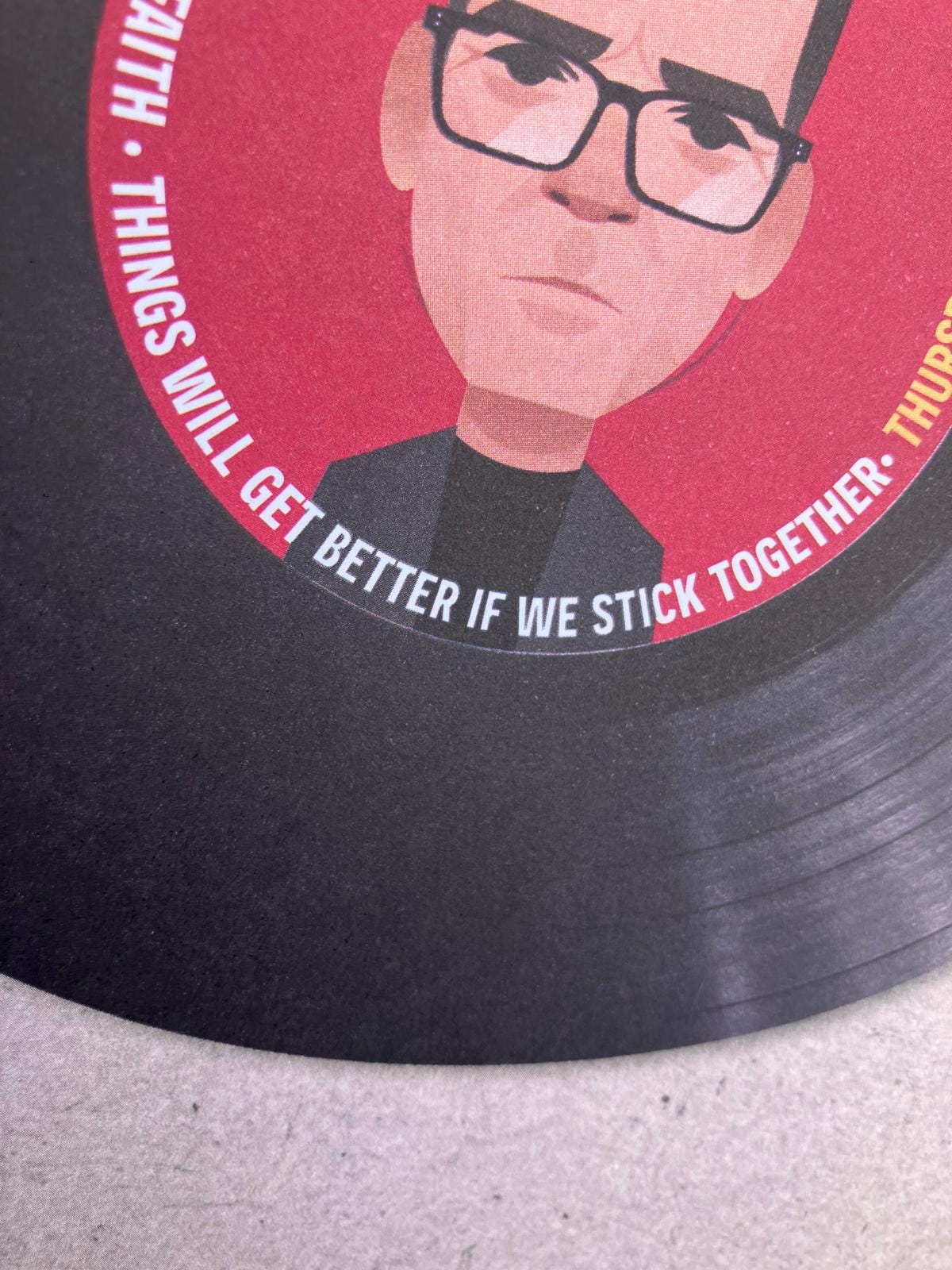
The Labour tradition I grew up with is based on the idea that we’re stronger when we stick together, and that we have obligations to one another which go beyond simply respecting each other’s individual choices.
Your situation in life isn’t simply your responsibility. Your illness isn’t something you should have to face alone. Your suffering isn’t simply your problem.
